Page 50 - FDMASIA JanFeb 2024
P. 50
48 Materials Jan/Feb 2024 FDM AsiA | www.fdmasia.com
pxhere.com
metres of Erisma uncinatum wood, and 12,422 cubic metres were sourced from an area of sustainable forest management in
Hymenolobium excelsum were harvested in log form. Vale do Jari, Almeirim, Pará, Brazil (01°31′24″ S, 52°34′54″ W).
Considering the large volume of waste generated in wood The wood of Pinus caribaea var. caribaea., which has
processing, these species show potential as raw materials for a basic density of 484.9 kg/cubic metres, was obtained at
the production of OSB panels. Fazenda Areão, Piracicaba, Sao Paulo, Brazil (22°42′30″ S,
Given the need for further studies regarding the performance 47°38′51″ W).
of Amazonian woods in OSB manufacturing, this study The Amazonian woods, originally in the form of boards,
aims to evaluate the potential of using a mixture of three were converted into blocks with dimensions of 90 mm wide
Amazonian wood species that have been underutilized by and 25 mm thick. The blocks were then subjected to an
the Brazilian wood industry—Caryocar villosum Aubl., Erisma autoclave process, which involved the application of vacuum
uncinatum Warm., and Hymenolobium excelsum Ducke—in and pressure until they reached complete saturation in water.
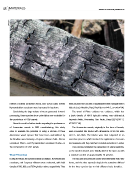
the composition of OSB panels. This process facilitated the generation of strand particles,
as the wooden boards were initially dried in the open air, with
Wood Preparation a moisture content of approximately 12 percent.
During the study, the species Erisma uncinatum, Hymenolobium The vacuum and pressure cycles were alternated every two
excelsum, and Caryocar villosum were evaluated, with bulk hours, and the time spent (in days) in the autoclave differed
density of 530, 630, and 730 kg/cubic metres, respectively. They for the three species due to their different basic densities.